An uncomfortable week to have an MBA
A conversation with Swati after reading a critique of business schools made me examine money, pride, and why my work at OneDigital feels meaningful.
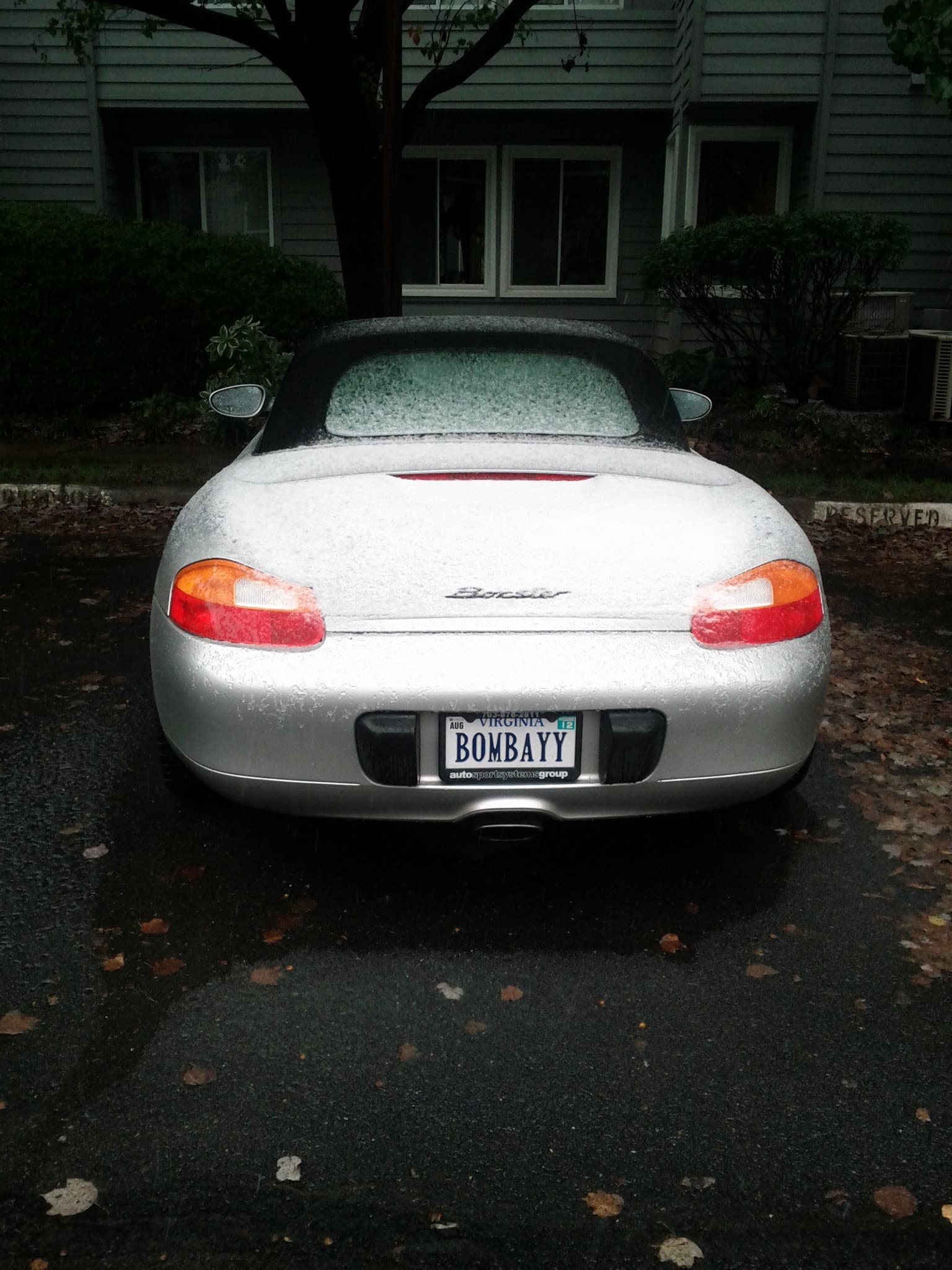
My first car, bought when I got my job at hCentive. A Porsche Boxster, with a BOMBAYY vanity plate.
Earlier this month, I sat in a Harvard Business School classroom while students discussed the AI coworker program I help run at OneDigital.
It was pretty surreal. These were smart people asking thoughtful questions about work that occupies a large part of my life. They were debating our decisions, questioning the approach, and talking about what they would do differently.
I felt proud to be there. I enjoyed it.
Then I read Chris Marquis’s essay in The New York Times, arguing that business schools should be abolished. Students arrive wanting to do something worthwhile and learn to see the world through profit, optimization, and financial success.
A lot of it made me uncomfortable.
I have an MBA from Willamette, a school that places considerable emphasis on social responsibility. Even so, I recognized myself in parts of what he was describing.
I want to make money. I have wanted to make money for a long time. My definition of success includes having money, and I don’t think it would be particularly honest to pretend otherwise.
I’ve written before about following interesting work and people I thought I could learn from. That’s true. Money has also been a major reason I’ve said yes to jobs. In quite a few cases, it was the biggest reason.
So some of the guilt was simply recognition.
And some of it, I think, came from having just been at Harvard and feeling so pleased about it. The recognition meant something to me. Reading a criticism of the institution shortly afterward made me examine why.
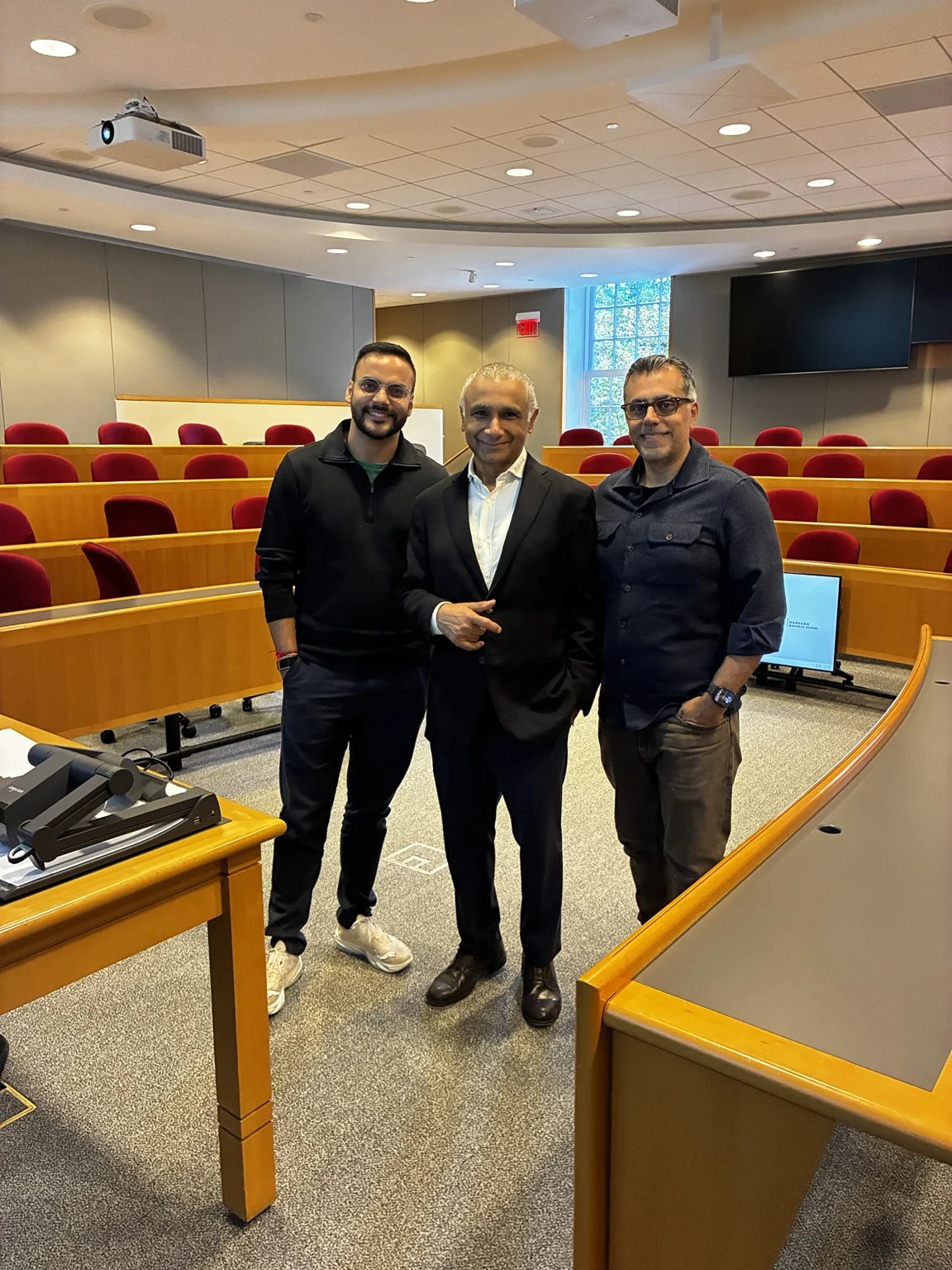
The classroom discussion came back to me too. One student had proposed a reduction in the workforce. Others had argued for growth, reskilling, and helping employees become more capable. There was a whole discussion about whether people would trust a company asking them to teach an AI what they knew.
I don’t want to flatten that into a room full of MBAs eagerly planning layoffs. That would be unfair to the conversation we actually had.
But the idea that you could improve a business by removing people was there. Reading the article afterward made it harder to leave that idea in the classroom.
I talked about all of this with Swati.
She asked me, “You feel this guilt and all that, but aren’t you doing the same thing?”
It was a fair question. I work on bringing AI into a company. A lot of the fear around AI comes from exactly that: companies discovering they can do the same work with significantly fewer people.
If you’re an employee watching this happen, being worried seems like a pretty reasonable response.
As we talked, we also talked about whether the way we’re approaching this at OneDigital is materially different.
I think it is. The jury is still out on whether we’ll make it work.
The position we’ve taken is that AI should help our people become much more capable, and that those more capable people can help the business grow. We want to give people the opportunity to grow with it.
That takes a lot more work than giving everyone access to a chatbot.
We spend time with offices, practices, and functions looking closely at what people actually do. Which parts of a job can AI take on? Which parts still need a person? What could that person do with the time they get back?
We use the terms reducible and irreducible work. The boundary keeps moving as AI gets better, so this is something we have to keep revisiting.
Helping someone offload paperwork or research is one part of it. Helping them figure out what to do next takes considerably more thought. How could they spend more time with clients? What judgment or expertise could they develop? What work have they never had the bandwidth to attempt?
Those questions occupy a lot of our time.
And the effort comes from the top. Mike Sullivan, who co-founded the company, describes himself as its chief activation officer. He spends his time traveling, talking to teams, and helping people understand how to use AI and how their work needs to evolve.
People have asked whether the approach is mostly PR. I understand the skepticism. Companies say a lot of reassuring things about their people.
What gives me confidence is seeing where the time, money, attention, and energy are going. I’m involved in the work behind those statements. I see how much effort it takes to help people learn, reconsider their jobs, and find a way forward.
We want the company to make money. We want it to grow. Investing in people can serve those ambitions too.
We also can’t promise that every existing job will survive or that everyone will find the transition easy. Mike and Vinay were open about that in the classroom. There are things we don’t know how to answer yet.
I find that honesty easier to believe than a guarantee.
As Swati and I talked, I kept coming back to the two jobs where I’ve felt the most fulfillment.
Early in my career, I worked at hCentive on the health insurance exchanges created after the Affordable Care Act. The systems we helped build allowed people to get health insurance, including people getting covered for the first time.
When I look back at that work, I feel proud of what it made possible.
I’ve enjoyed other jobs. I’ve learned, worked with good people, and been paid well. But that particular feeling has been rare.
I feel it again at OneDigital.
I don’t know what conclusion that entitles me to draw about business schools, or the much bigger questions Marquis raises. I’m still thinking about those.
The conversation with Swati helped me understand something closer to home. I care about the outcome for the people whose jobs we’re helping change. I also believe the people leading this effort care, and I see them putting serious work behind it.
I still want to make money. I still enjoyed being at Harvard.
And when I go back to work, helping our people find their way through this change is something I want to spend my time doing.
Robin's Notebook
A new entry every couple of weeks. No promotion, no funnel, no manifesto. Just the unfiltered version.
Subscribing opens beehiiv.com in a new tab to confirm. Unsubscribe anytime; I won't share your email.